Your dog’s pancreas: the little engine that could

Your dog’s pancreas: the little engine that could
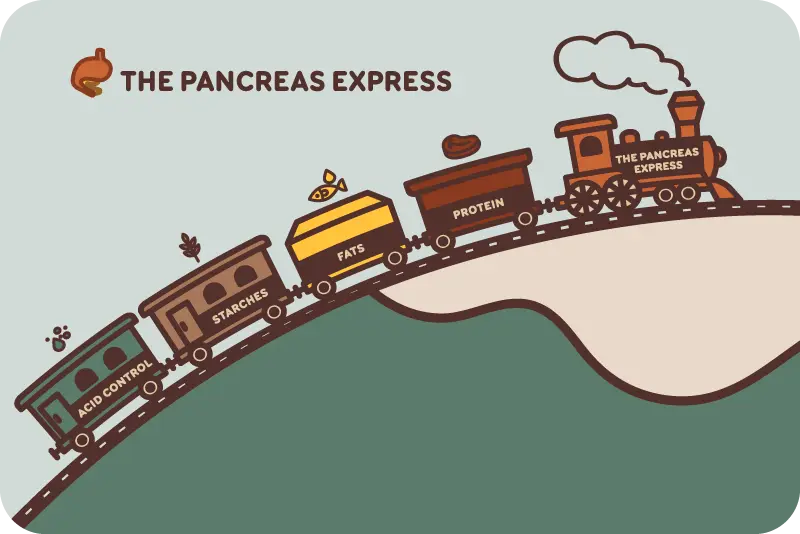
Your dog’s pancreas may be a small organ, but when it comes to digestion, it has an enormous job. Sitting alongside the stomach and small intestine, it quietly produces many of the digestive enzymes needed to turn food into nutrients the body can absorb and use. I like the analogy of the pancreas being a bit like the little engine that could. Meal after meal, day after day, it keeps chugging away behind the scenes.
When a dog eats, the pancreas releases different enzymes to help digest food. Proteases help break down protein, lipase helps digest fat and amylase helps digest starch. It also produces bicarbonate, which helps neutralise the acidic contents leaving the stomach before they enter the small intestine.
Interestingly, the pancreas can adapt its enzyme activity according to what is being fed. In a study published in The Journal of Physiology, Behrman and Kare fed dogs diets containing different proportions of protein, fat and carbohydrate and examined the resulting pancreatic enzyme activity. They found that enzyme activity changed according to the composition of the diet.[1] In other words, what we put into the bowl influences what we ask the pancreas to do.
Dogs, carbohydrates and the pancreas
Carbohydrates are particularly interesting because, unlike humans, dogs produce virtually no amylase in their saliva. When we eat starch, digestion begins while we're still chewing, whereas dogs rely much more heavily on pancreatic amylase once food reaches the small intestine.
Dogs can absolutely digest carbohydrates, and they're actually very good at it. One of the fascinating adaptations that occurred as dogs evolved alongside humans was an increased ability to digest starch. Compared with wolves, many domestic dogs have more copies of the gene responsible for pancreatic amylase production. This was a useful adaptation for an animal increasingly sharing our environment and our food.
But there is a difference between being capable of digesting something and considering how much of it we want to feed at every meal. With a starch-heavy diet, we're asking the digestive system to process a substantial carbohydrate load, with the pancreas playing an important role in that process.
This is where the little engine analogy becomes useful. The engine might be perfectly capable of pulling the train, but as we add more carriages, we're asking more of it. Dietary composition influences pancreatic activity, so it makes sense to consider the overall carbohydrate load we're asking a dog's digestive system to manage, particularly when highly processed starch makes up a large proportion of the diet.
And then there is fat
For years, fat has received much of the blame when we talk about pancreatitis in dogs. There are certainly situations where restricting fat is important, particularly in dogs with recurrent pancreatitis or high levels of fat circulating in their blood. A dog getting into the rubbish and consuming an enormous fatty meal is also very different from their usual balanced diet.
However, our understanding of fat and pancreatitis is becoming more nuanced. A 2026 review published in the Journal of the American Veterinary Medical Association examined the strength of the available evidence linking dietary fat with pancreatitis in dogs. The authors found that, despite the long-standing association between high-fat diets and pancreatitis, current evidence does not consistently support dietary fat as an independent risk factor for naturally occurring pancreatitis in dogs.[2]
It is also worth thinking about what we actually mean when we say “fat”. Fresh, naturally occurring animal fat within a balanced diet is very different from a dog suddenly consuming a huge amount of fatty table scraps, and different again from a fat that has become oxidised or rancid.
Cooking itself doesn't automatically make fat harmful, but heat, oxygen, light and time can alter fats. Repeated or prolonged heating can accelerate oxidation, particularly in more delicate polyunsaturated fats. Fish oil is a good example. It can be an excellent source of omega-3 fatty acids, but it is also vulnerable to oxidation, which is why freshness, packaging and storage matter.
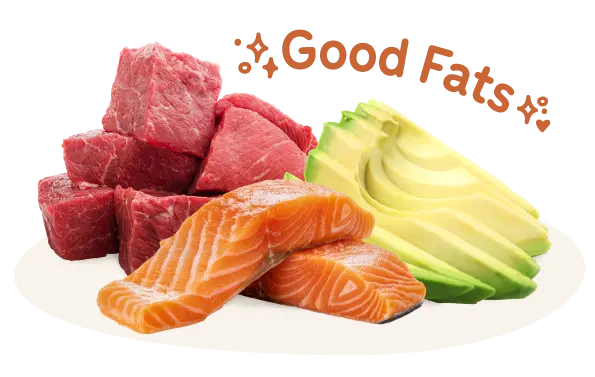
Rather than treating all fat as the same, it makes more sense to think about its source, quality, freshness and quantity, as well as the individual dog eating it.
We also know that not every dog has the same susceptibility to pancreatic disease. Genetics appear to play a role, with certain breeds consistently overrepresented in pancreatitis cases. Miniature Schnauzers are perhaps the best-known example. Weight, blood-fat levels, other health conditions, certain medications and dietary indiscretion can also contribute. In many cases there isn't one obvious cause at all.
This is why pancreatic health can't really be reduced to one ingredient or one macronutrient. From a nutritional perspective, it makes more sense to look at the diet as a whole. Good-quality protein, appropriate fresh fats and avoiding an unnecessary reliance on highly processed starch are a sensible starting point. Fibre and a healthy gut microbiome are important parts of digestive health too.
Whole foods also bring diversity to the bowl. Berries, colourful vegetables and herbs provide naturally occurring antioxidants and phytonutrients. Ingredients such as milk thistle, dandelion, turmeric, broccoli sprouts, chlorella and spirulina provide a range of plant compounds that can form part of a varied, nutrient-rich diet. They're not a magical “detox” for the pancreas, but they can contribute to good nutrition and support normal digestive and organ function.
Reducing load on your dog’s pancreas
The pancreas is remarkably hardworking, and dogs themselves are remarkably adaptable. Their ability to digest starch is actually a wonderful example of that adaptability. But when we're deciding what to put in their bowl, perhaps the question shouldn't only be whether they can digest it.
If the pancreas is our little engine that could, it's also worth thinking about what we're asking it to pull, meal after meal, year after year.
Nourish Nutrition Optimal Support combines quality animal ingredients with wholefood plant inputs and functional ingredients that support everyday digestive balance and the body’s natural clearance pathways, including gentle fibre and prebiotics such as apple, green banana and psyllium, plus nutrient dense green ingredients, mushrooms, and traditional herbs such as dandelion and milk thistle.
About the Author - Dr Nicole Rous

References
- Behrman HR, Kare MR. Adaptation of canine pancreatic enzymes to diet composition. J Physiol. 1969;205(3):667–676. doi:10.1113/jphysiol.1969.sp008989.
- Yamka R, Sires R, Wakshlag J, Gaylord L, Cridge H. High fat, high risk? Evaluating the strength of evidence linking dietary fat and pancreatitis in dogs. J Am Vet Med Assoc. 2026;264(7):913–919. doi:10.2460/javma.25.11.0773.
