Pancreatitis in dogs and why diet choices matter

If you’ve ever sat across from your dog after a rough night of vomiting, a suddenly skipped breakfast, or that unmistakable “I don’t feel right” posture, you’ve probably heard the word pancreatitis mentioned.
As a vet, we absolutely do see dogs with clear, “clinical” pancreatitis. But I also see something even more common. Dogs living in what I call a pancreas risk zone. They’re not acutely unwell enough for a dramatic diagnosis, yet their digestion and metabolism are telling a story. Recurrent gut upsets. Fussy or fluctuating appetite. Mild changes on bloodwork. Sensitive stomachs that flare after treats or diet changes. And often, not always, a background of ultra processed feeding patterns.
To understand why this matters, you need to understand one thing first.
What does the pancreas do in dogs
Think of the pancreas as a quiet, behind the scenes organ that responds to every meal. It has two big jobs.
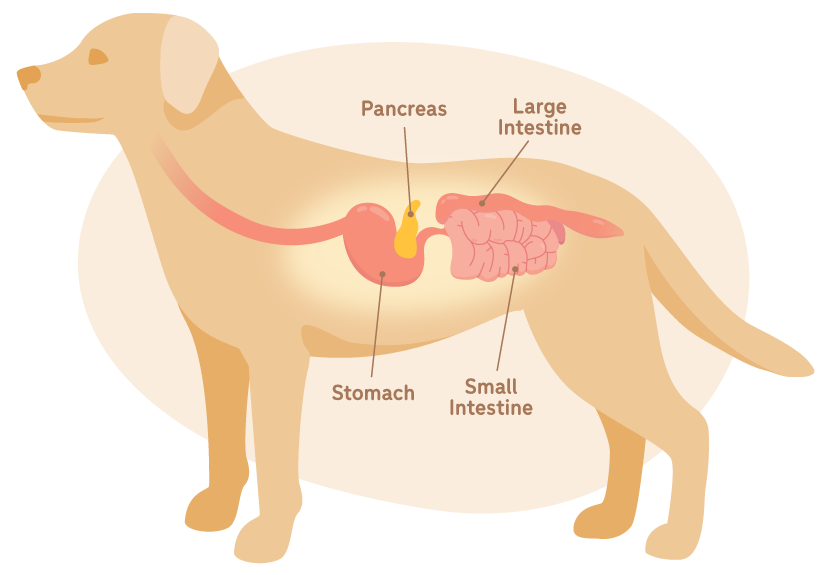
The digestive pancreas exocrine pancreas
This is the enzyme factory. When your dog eats, the pancreas releases digestive enzymes into the small intestine to help break food down.
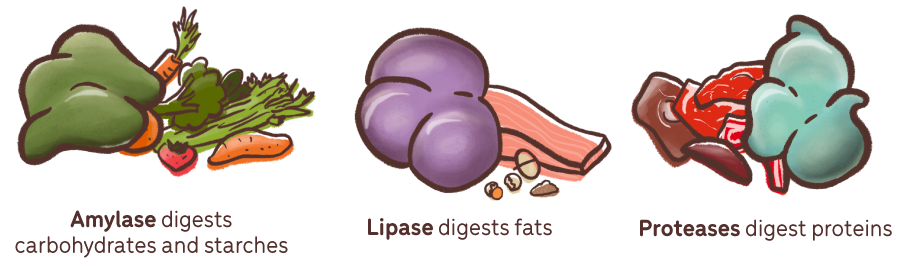
Here’s the key concept many pet parents have never been taught.
• Amylase digests carbohydrates and starches
• Lipase digests fats
• Proteases digest proteins
Why this matters is that the composition of the meal influences what the pancreas needs to produce. If a meal is more starch heavy, the body signals for more carbohydrate digestion support, meaning the pancreas needs to ramp up amylase output to match demand.
And here’s a really helpful difference between dogs and humans.
Humans begin starch digestion in the mouth because we produce salivary amylase. Dogs have little to no salivary amylase, so their starch digestion relies much more heavily on what happens after the meal reaches the small intestine, with a major contribution from pancreatic amylase.
The blood sugar pancreas endocrine pancreas
This department releases hormones like insulin and glucagon to regulate blood sugar.
Most people are familiar with this because it is similar in humans. And remember, when carbohydrates are digested, they ultimately become glucose, which then requires hormonal regulation.
Same organ, two jobs.
So what is pancreatitis in dogs?
The ‘itis’ in a word simply means inflammation, so pancreatitis means inflammation of the pancreas. It can be acute, meaning sudden, or chronic, meaning ongoing or low grade. Severity can range from mild to life threatening.
In clinic, we diagnose pancreatitis using a combination of history, physical exam, blood tests and ultrasound. More serious cases often need intravenous fluid therapy, a drip, and hospital support.
A quick note. Pancreatitis is different in humans. Common causes include alcohol and gall bladder disease. In dogs, the patterns and triggers are different.
Signs of pancreatitis in dogs
Pancreatitis doesn’t always look dramatic. Common signs include:
• Vomiting or nausea
• Reduced appetite
• Lethargy
• Abdominal discomfort, sometimes subtle
• Diarrhoea
• Dehydration
If your dog is repeatedly vomiting, can’t keep water down, seems painful, collapses, or is profoundly lethargic, that’s an urgent vet visit.
What causes pancreatitis?
Here’s where we need to stay grounded and evidence based.
Many cases are idiopathic, meaning we don’t find one neat cause, but there are well recognised risk associations. In dogs, one of the most consistent themes is dietary indiscretion and higher fat exposure, especially in dogs who already have metabolic risk factors.
Common risk contexts include (Cridge et al., 2022):
• High fat meals or sudden fatty treats
• Hypertriglyceridaemia or hyperlipidaemia
• Obesity
• Concurrent endocrine disease, for example diabetes or Cushing’s
Where carbohydrates fit into the story The two fold pressure concept
Let’s take a step back again, because this is where the pancreas conversation becomes really powerful.
Yes starch triggers a pancreatic job
When a dog eats a starchy meal, the body signals for starch digestion, and pancreatic amylase plays a major role.
Also yes dogs can digest carbohydrates
Dogs have evolved alongside humans and developed genetic adaptations that support starch digestion (Arendt et al., 2014). There’s also individual variation between dogs, which is one reason some dogs seem to cope with starch heavy diets better than others.
The key integrative insight - the pancreas can be working overtime in two ways
When a dog eats a highly refined, starch heavy diet, the pancreas is involved in two ways.
1. Digestive demand producing more amylase to digest starch
2. Metabolic demand helping regulate post meal glucose via insulin signaling
That doesn’t mean carbs cause pancreatitis. It means diet patterns can influence vulnerability over time, especially when the pattern is ultra processed, highly refined, and paired with lifestyle factors like weight gain, elevated triglycerides, and inconsistent treat habits.
And once a dog is vulnerable, it may only take one trigger, a fatty treat, sudden diet change, scavenged food, or a gut upset, to tip them into a flare.
The pancreas risk zone - what I see all the time
If I had to describe a pre flare pattern, without inventing a formal diagnosis, it often looks like this.
1. Intermittent vomiting or sensitive stomach
2. Soft stools that come and go
3. Appetite that’s fussy or inconsistent
4. Weight creeping up
5. Known elevated triglycerides
6. A history of food events such as rich chews, table scraps, weekend extras
This is where prevention becomes powerful. Not because you can control every variable, but because you can reduce the big loads that push a sensitive pancreas over the edge.

Feeding principles that genuinely help
Always follow your veterinarian’s plan for your individual dog, but these are common, evidence aligned principles, especially after pancreatitis or in recurrence prone dogs.
1. Control fat and keep it consistent
Most conventional pancreatitis diet guidelines focus on low fat, and that can be a very appropriate starting point, especially early on (Cridge et al., 2024). Where I see dogs get into trouble is often with inconsistent fat exposure, the good during the week, rich treats on the weekend pattern, particularly when the base diet is highly processed and starch heavy.
2. Keep meals predictable
Pancreas sensitive dogs usually do best on boring consistency.
• Consistent base diet
• Consistent treat rules
• No surprise scraps
3. Choose digestibility over novelty
In recovery, we want food that is gentle and predictable in the gut.
4. Support digestive capacity strategically
For some dogs, I’ll consider targeted support such as synbiotics, meaning pre and probiotics, and in select cases, digestive enzymes. This is individual, and it should be guided by your vet based on your dog’s symptoms and history.
5. Zoom out body condition and triglycerides matter
If a dog is overweight or has higher triglycerides, addressing that can meaningfully reduce overall pancreatitis susceptibility.
6. Monitor upstream changes
I like to monitor bloodwork over time and look for subtle patterns before bigger problems appear. In some dogs, I’ll also track gut health more closely, because gut inflammation patterns and microbiome disruption can contribute to digestive instability.
Which diet should you choose?
There’s no single perfect diet for every dog. The best diet is the one that fits your dog’s individual needs and is sustainable for your family.
For dogs in that risk zone, I’m usually thinking about reducing ultra processed inputs, improving overall ingredient quality, keeping fat exposure consistent, choosing a more stable species appropriate pattern where possible, and avoiding the food event lifestyle that so often triggers flares.
Where Nourish Nutrition Optimal Support fits
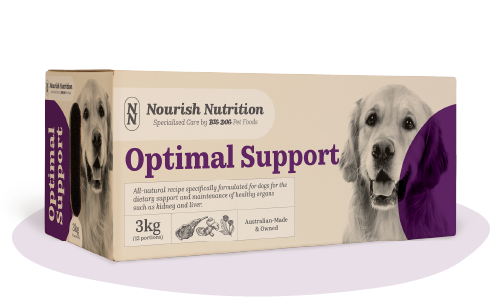
For dogs with sensitive digestion, I also like the idea of adding a supportive nutrition layer alongside the right base diet. That’s where Nourish Nutrition Optimal Support can fit in. It combines quality animal ingredients with wholefood plant inputs and functional ingredients that support everyday digestive balance and the body’s natural clearance pathways, including gentle fibre and prebiotics such as apple, green banana and psyllium, plus nutrient dense green ingredients, mushrooms, and traditional herbs such as dandelion and milk thistle.
Important note. If your dog has had pancreatitis, the priority remains a vet guided base diet with consistent fat intake. Optimal Support is best positioned as nutritional support, not a treatment for pancreatitis.
Quick FAQ
Does the pancreas make amylase in dogs?
Yes. Pancreatic secretions include digestive enzymes such as amylase, lipase, and proteases.
Do carbs cause pancreatitis in dogs?
The strongest evidence in dogs supports fat exposure and dietary indiscretion and metabolic factors such as hyperlipidaemia as major risk themes. Carbs are digested partly via pancreatic amylase, but carbs directly cause pancreatitis is too simplistic.
What should I feed after pancreatitis?
Your vet will guide the best option for your dog, but low fat, highly digestible diets are commonly recommended in management, especially early on.
About the Author - Dr Nicole Rous

References for the evidence minded
Merck Veterinary Manual. Pancreatitis in Dogs and Cats Internet. Available from: https://www.msdvetmanual.com/digestive-system/the-exocrine-pancreas/pancreatitis-in-dogs-and-cats Accessed 2026 Feb 15.
Cridge H, Lim SY, Algül H, Steiner JM. New insights into the etiology, risk factors, and pathogenesis of pancreatitis in dogs: Potential impacts on clinical practice. J Vet Intern Med. 2022 May;36(3):847-864. doi:10.1111/jvim.16437. Epub 2022 May 12. PMID:35546513. PMCID:PMC9151489.
Arendt M, Fall T, Lindblad-Toh K, Axelsson E. Amylase activity is associated with AMY2B copy numbers in dog: implications for dog domestication, diet and diabetes. Anim Genet. 2014 Oct;45(5):716-722. doi:10.1111/age.12179. Epub 2014 Jun 28. PMID:24975239. PMCID:PMC4329415.
Cridge H, Parker VJ, Kathrani A. Nutritional management of pancreatitis and concurrent disease in dogs and cats. J Am Vet Med Assoc. 2024 Jun 1;262(6):834-840. doi:10.2460/javma.23.11.0641. PMID:38569533.
